
Participate in Land Use Decisions
Oregon law requires public involvement. Your voice can shape the future of our region if you know how to engage effectively.
5 Steps to Influence a Decision
A practical roadmap for engaging in the land use process.
Find the proposal and deadlines
Check city or county agendas, public notices, and staff reports. Timing is everything in land use.
Learn the basics
Understand what decision is being made and which rules (zoning, comprehensive plan) apply to the project.
Comment effectively
Draft a written comment or prepare oral testimony that specifically addresses the legal decision criteria.
Stay involved
Follow revisions, attend follow-up meetings, and track the final decision to ensure accountability.
Share and collaborate
Connect with neighbors and groups like Rogue Advocates to amplify your voice and share research.
Where Decisions Happen
Planning Staff
The 'desk' where proposals are filed. They write the Staff Report which analyzes the project's legality.
Planning Commission
Appointed locals who hold hearings and make formal recommendations or initial decisions.
City/County Council
Elected officials who usually make the final local decision on large projects or code changes.
Advisory Committees
Citizen groups (like CACs or TACs) that provide early feedback on neighborhood-specific plans.
Note: Specific processes vary by city and county. Always check local bylaws.
Civic Calendar
Stay informed on the decisions shaping the Rogue Valley. Find upcoming planning meetings, public hearings, and local land use discussions.
Showing 10 of 83 upcoming meetings
Ashland City Council
Business meetings; study sessions may occur on alternate Tuesdays
Central Point Planning Commission
Jacksonville City Council
Jackson County Board of Commissioners
Business meetings; administrative sessions alternate weeks at 10:00 AM
Josephine County Board of Commissioners
2nd Wednesday meets at 5:30 PM instead of 9:00 AM
Grants Pass City Council
Talent City Council
Preceded by 6:00 PM study session
Medford City Council
Study sessions at noon same days
Phoenix City Council
Rogue River City Council
Quick Resources
Need Help?
Can't find a specific meeting or need assistance with the livestream link?
Contact a Civic Curator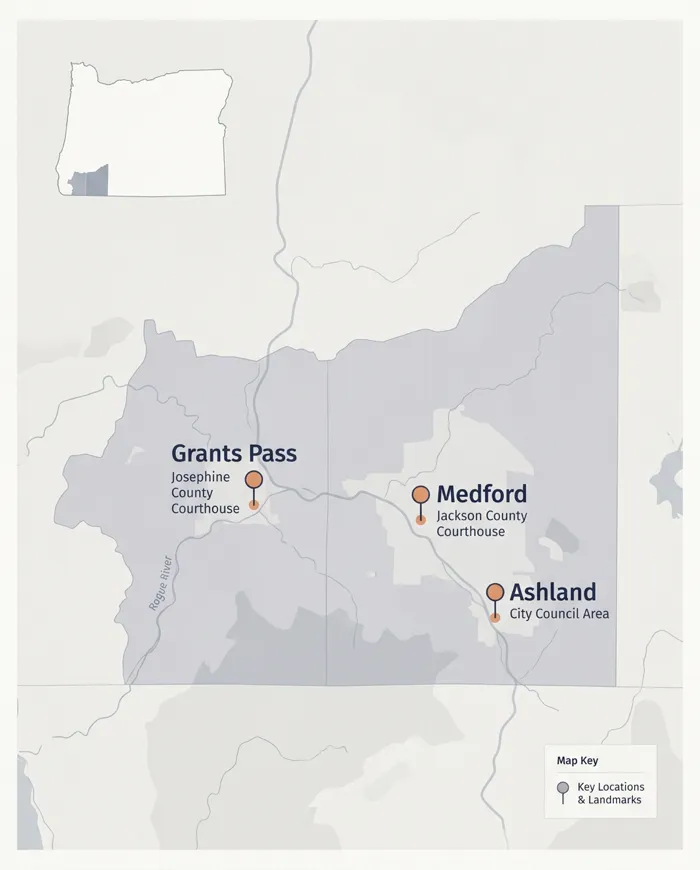
Geographic Context
View active land use applications across our valley-wide interactive map.
Document Toolkit: What to Read
Public Notice
The 'alert' that a project is happening. It lists the file number, location, and hearing date.
Staff Report
The most important document. It summarizes the project and argues whether it meets the law.
Decision Criteria
The list of 'tests' a project must pass. If it fails one test, it should be denied.
Maps & Exhibits
Visuals provided by the applicant. Check these for accuracy regarding traffic or environment.
Draft Findings
A draft of the final explanation. Review these to see if staff missed a key public concern.
Conditions of Approval
The 'fine print' that requires a developer to fix issues before they can build.
How to Write a Strong Comment
Lead with your ask. Tell them immediately if you support, oppose, or want specific changes to the proposal.
Cite the relevant rule. Decisions are based on legal criteria. Refer to specific sections of the city code or state goals.
Describe real-world impact. Use facts about traffic, water, or safety that decision-makers might have missed.
Testimony Tips
- Stick to your 3-minute limit.
- Focus on facts, not just feelings.
- Provide a written copy of your oral remarks.
Great Comments Do This
- Address a specific legal criterion
- Include photos or maps as evidence
- Suggest a specific solution or condition
- Are submitted before the deadline
Common Pitfalls
- Attacking the developer personally
- Generalizing about growth without specifics
- Submitting comments after the record closes
- Forgetting to include your contact info
Engagement Templates
Land Use Glossary
Urban Growth Boundary (UGB)
A line around a city that focuses urban development inside while protecting farmland and forests outside.
Comprehensive Plan
A long-range policy document that guides a city or county's future growth and land use goals.
Zoning
Specific rules for a piece of land that dictate what can be built there (residential, commercial, industrial, etc.).
Findings
The written explanation of how a decision-maker determined that a project does or does not meet the law.
Conditions of Approval
Requirements placed on a developer (e.g., adding a sidewalk) that must be met for the project to proceed.
Public Record
The collection of all evidence, comments, and documents considered by decision-makers for a specific file.
Testimony
Formal statements given by the public during a hearing, either in person, via video, or in writing.
How We Can Help
Rogue Advocates empowers community members by demystifying the land use process. We can help you find documents, understand criteria, and refine your testimony.
When to contact us:
- You have a project link and a deadline is approaching
- The proposal affects farmland, forests, or water
- You want help identifying the right decision criteria
- The public notice process feels non-transparent
